
Views: 0 Author: Site Editor Publish Time: 2026-06-29 Origin: Site


Modern physiotherapy clinics face a difficult dual challenge. They must deliver rapid, verifiable outcomes for stubborn conditions. At the same time, they need to justify major capital equipment investments. The clinical technology landscape matures fast. Radial pressure wave devices are now standard in many practices. However, clinical differentiation moves quickly. It shifts toward true focused shockwave therapy. This advanced technology allows practitioners to execute deep-tissue and cellular-level interventions. Superficial radial devices simply cannot reach these depths. To stay competitive, clinic directors need a robust evaluation framework. They must justify the capital expenditure of advanced shockwave technology. You must look beyond basic marketing claims. You have to analyze clinical efficacy, patient comfort, and operational longevity. We will explore exactly how modern practices assess these machines. You will learn how to integrate this modality seamlessly into your daily clinical workflow. You can upgrade patient care while maintaining a healthy operational margin.
Focused shockwave therapy provides precise energy delivery for deep-tissue pathologies (e.g., calcific tendinopathy, non-unions) that superficial modalities cannot effectively reach.
Evaluating a device requires looking beyond top-line energy outputs to examine focal zone precision, penetration depth, and consumable lifespans.
Partnering with a reliable focused shockwave therapy manufacturer mitigates the hidden costs of equipment downtime and ensures regulatory compliance.
Successful clinic integration relies on structured staff training, clear patient selection criteria, and realistic cash-pay or premium billing models.
Standard modalities hit a strict physical limit. Energy dissipates right at the skin level. Radial devices create acoustic waves. These waves spread outward and lose power quickly. They treat superficial tissues well. However, they struggle to reach deep pathologies. In contrast, focused devices concentrate energy into a specific focal zone. The energy peaks precisely at the targeted depth. This pinpoint accuracy transforms how you treat complex cases. Superficial therapies cannot match this physical capability. You deliver healing energy directly into the lesion.
Let's examine the targeted indications driving clinical adoption. Evidence-backed applications include deep bone pathologies. You can effectively treat delayed bone healing and stress fractures. Leading organizations, such as the International Society for Medical Shockwave Treatment (ISMST), highlight these specific applications. Calcific rotator cuff tendinopathy responds exceptionally well. The precision allows you to break down calcifications safely. You preserve surrounding healthy tissue. Practitioners also report strong results for recalcitrant plantar fasciitis and deep muscle trigger points. Proximal hamstring tendinopathy improves significantly under targeted acoustic energy. The clinical versatility is unmatched.
Patient comfort plays a huge role in treatment success. Focused shockwaves bypass surface pain receptors. The acoustic wave compresses and peaks only when it hits the deeper target. Patients feel significantly less surface-level pain. This mechanism increases patient compliance during treatment. You can deliver high-energy pulses without causing unbearable discomfort. High patient compliance directly impacts your clinical efficacy. Patients complete their full treatment protocols. They do not cancel appointments due to fear of pain. Better compliance yields superior healing outcomes.
Feature | Standard Radial Modalities | True Focused Modalities |
|---|---|---|
Energy Dissipation | Highest at skin surface, diverges quickly. | Minimal at skin, peaks at exact target depth. |
Target Depth | Superficial (typically 1-3 cm). | Deep tissue (can exceed 10 cm). |
Primary Indications | Superficial tendinopathies, myofascial release. | Deep calcifications, non-unions, deep trigger points. |
Surface Comfort | Can be highly painful at high energy levels. | Highly comfortable on the skin surface. |
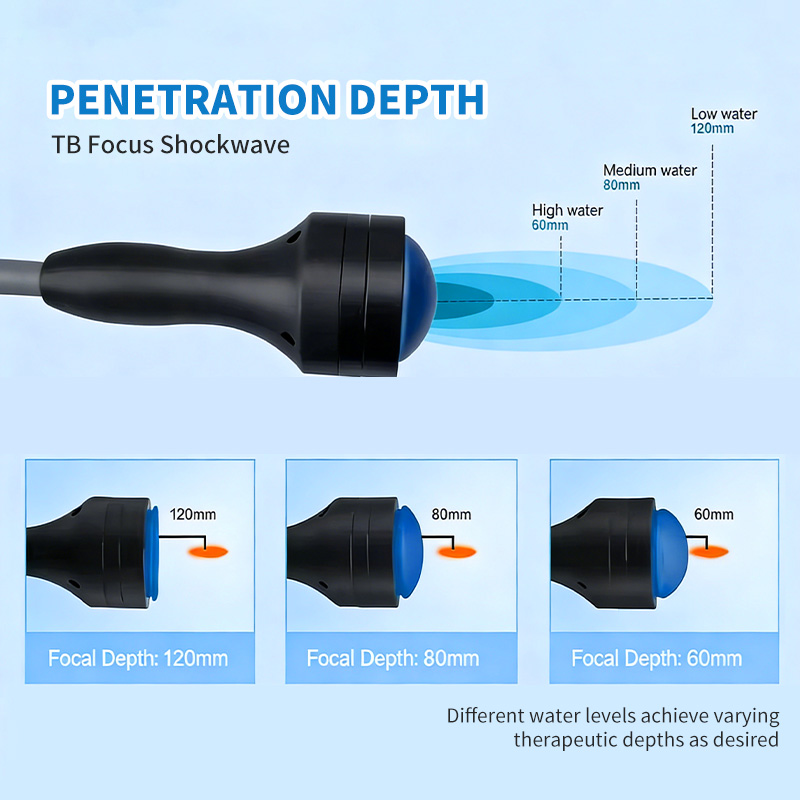
You must evaluate how these machines generate acoustic energy. Generation mechanisms impact maintenance, durability, and machine longevity. Buyers must understand these differences clearly.
Piezoelectric Generation: Hundreds of crystals expand when exposed to an electrical current. This synchronized expansion creates a highly precise shockwave. These systems are incredibly accurate. They often require less frequent maintenance over their operational life.
Electromagnetic Generation: A cylindrical coil generates a magnetic field to propel a membrane. This rapid physical action creates the acoustic wave. These devices offer excellent durability. They provide a highly stable focal zone for consistent treatments.
Electrohydraulic Generation: A high-voltage spark creates a plasma bubble inside a fluid chamber. The bubble expands rapidly and generates a powerful acoustic wave. These systems deliver massive peak energy. However, the internal electrodes degrade quickly. You must replace them often.
Penetration depth dictates your clinical capabilities. You need versatile equipment. Adjustable standoff pads alter how deep the wave travels into the body. Precise focal volumes let you target tissues accurately. You deliver energy exactly where the patient needs it most. You avoid damaging nearby nerves or delicate blood vessels.
Energy Flux Density (EFD) measures the energy concentration in the focal area. EFD dictates the physiological response of the tissue. Below is a clinical reference chart summarizing these ranges.
Clinical Application | Required EFD Range (mJ/mm²) | Target Physiological Response |
|---|---|---|
Superficial Pain & Trigger Points | 0.05 - 0.10 | Pain modulation and muscle relaxation. |
Chronic Tendinopathies | 0.11 - 0.25 | Cellular stimulation and neovascularization. |
Calcifications & Bone Healing | 0.26 - 0.50+ | Disintegration and targeted osteogenesis. |
You must adopt an evidence-oriented standard. Always cross-reference technical specifications against peer-reviewed clinical parameters. Look at NCBI study baselines before buying. Ensure the machine delivers the specific EFD required for your target indications. This validation guarantees you invest in capable focused shockwave therapy technology. Do not rely solely on sales brochures. Verify the physics yourself.
Clinic directors must evaluate the full lifetime equipment expenditure. The initial capital outlay is only the first step. You must prioritize the cost of replacement applicator heads. You must account for internal component wear. Applicator lifespans vary dramatically across different devices. A cheaper machine might require expensive, frequent applicator changes. These consumable costs accumulate rapidly over years of heavy clinic use. You must map out these ongoing operational expenses carefully. We advise calculating the cost per shock before signing a contract.
Integrating this technology requires smart billing strategies. Standard insurance often does not cover these advanced procedures. Successful clinics use premium cash-pay models instead. They design specialized treatment packages. You offer a clear, accelerated healing timeline. Patients willingly pay for faster recovery and pain relief. Value-based pricing works best here. Explain the cellular regeneration benefits clearly to your patients. High-level athletes and active professionals usually accept premium billing for faster return to play. Clear communication builds patient trust. You should outline the exact biological process during the initial consultation. Patients invest in outcomes.
High machine utilization drives clinical profitability. Treatment sessions typically last only 10 to 15 minutes. A standard protocol requires just 3 to 5 sessions per patient. This clinical efficiency allows high patient throughput. You can treat multiple patients in a single morning. Fast turnover prevents scheduling bottlenecks. Your practice handles higher volume effortlessly. You do not need to increase your staffing levels. The machine acts as a powerful practice multiplier.
Your clinical success depends heavily on vendor reliability. Partnering with a reputable focused shockwave therapy manufacturer prevents long-term operational headaches. It secures your daily workflow.
Regulatory compliance is completely non-negotiable. The equipment must have specific FDA clearance or CE medical certification. These certifications must align exactly with your stated clinical indications. Uncertified equipment exposes your practice to massive liability risks. Always verify these credentials directly through official databases. Reliable manufacturers proudly display their testing certificates.
You need transparent maintenance agreements and strong Service Level Agreements (SLAs). A machine sitting offline means lost revenue. It also delays critical patient treatments. Evaluate the manufacturer's response times and warranty conditions. They must provide rapid technical support. They should offer loaner devices during major repairs. An idle clinic room drains your practice resources rapidly.
Clinical training support determines your initial success. Proper physics education ensures patient safety. Anatomical targeting training maximizes clinical efficacy. The onboarding process must be comprehensive. Staff need to understand how to adjust energy settings safely. They must know how to couple the device correctly to the skin. Excellent vendors provide ongoing educational modules.
Assess the supply chain transparency for proprietary consumables. Replacement parts must be readily available. Long lead times disrupt your clinic schedule. Ask the manufacturer about their domestic inventory levels. Fast shipping ensures continuous clinic operation. You avoid canceling lucrative appointments due to missing parts.
Adopting advanced technology introduces a steep learning curve. Focused devices require high anatomical precision. Radial devices use a simple point-and-shoot approach. Focused systems demand precise spatial targeting. Clinicians often use ultrasound imaging to locate the exact pathology. You must pinpoint the lesion accurately to deliver the energy correctly. Your staff must commit to mastering this higher-level diagnostic skill. Missing the focal zone means the treatment will fail. Many clinics partner ultrasound training alongside their shockwave onboarding. Dual-modality training accelerates staff competence. It elevates the entire standard of care inside your facility.
Patient selection remains a critical safety factor. You must screen strictly for contraindications to protect your practice.
Malignancies in the localized treatment area.
Pregnancy or developing fetuses.
Severe coagulopathies or active blood-clotting disorders.
Recent steroid injections in the targeted joint.
Infections affecting the deep tissue.
Screening protects clinical safety. It ensures you only treat ideal candidates. Safety protocols prevent adverse events. A rigorous intake process filters out high-risk individuals immediately.
You must avoid overpromising results. Never market this therapy as an instant magic bullet. Tissue regeneration takes real time. Cellular repair mechanisms operate on timelines of weeks to months. Frame your clinical success around realistic physiological healing phases. You manage patient expectations effectively. This transparency protects your clinic's long-term credibility. Patients must understand the biological healing timeline before starting. Educated patients become your best advocates.
Adopting this advanced modality represents a strategic clinical upgrade. You must balance impressive technical capabilities against strict business realities. Clinical directors improve patient outcomes significantly by targeting deep pathologies. However, successful adoption demands careful operational planning. Superficial treatments alone no longer satisfy complex patient needs.
Always prioritize penetration precision and consumable lifespans during your selection process. Manufacturer reliability matters far more than an endless list of basic software features. You need a partner who supports your long-term practice growth. Working with an established focused shockwave therapy manufacturer secures your equipment investment. They provide the backbone for your clinical expansion.
Take immediate action to refine your shortlisting process. Request detailed clinical data sheets from your chosen vendors. Calculate your exact operational break-even point based on your expected patient volume. Schedule a hands-on clinical demonstration to evaluate the machine ergonomics. You can transform your clinical practice through informed decision-making.
A: Radial devices have a lower barrier to entry but face higher market saturation. Focused devices command premium per-session pricing due to advanced capabilities and deeper tissue penetration. You can differentiate your clinic easily. This exclusivity drives higher overall margins despite the larger initial equipment investment.
A: Lifespan varies by the physical generation method. Most systems range between 1 to 5 million shocks before requiring replacement. Buyers must calculate this expense into their per-treatment operational cost. Piezoelectric and electromagnetic systems typically offer longer lifespans compared to electrohydraulic alternatives.
A: While not strictly mandatory for all superficial treatments, clinical best practice strongly recommends it. Higher efficacy rates for deep pathologies rely on concurrent ultrasound guidance. This imaging ensures the focal zone hits the exact lesion. Precise targeting prevents wasted energy and maximizes your clinical outcomes.
A: Look for ISO 13485 certification. You also need specific CE marks for medical devices. Ensure they have FDA 510(k) clearances tied directly to orthopedic or physiotherapeutic indications. These regulatory credentials guarantee safety and protect your practice from severe liability risks.


