
Views: 0 Author: Site Editor Publish Time: 2026-06-25 Origin: Site


Chronic pain management often forces practitioners and patients into a difficult compromise between ineffective conservative treatments and high-risk surgical interventions. We see clinical teams struggling daily to break this frustrating cycle. Finding reliable tools for stubborn musculoskeletal issues remains a top priority across the medical field. Extracorporeal Shockwave Therapy (ESWT) has evolved significantly over recent decades. Today, focused shockwave therapy emerges as a precision tool for deep-tissue healing and non-invasive pain relief. It bridges the critical gap between basic physical therapy and invasive surgery.
This guide evaluates the clinical efficacy, operational benefits, and implementation realities of focused shockwave therapy. You will learn how to assess these modern systems objectively. We will help you determine if this modality is the right investment for your clinical protocols.
Focused shockwave therapy delivers high-energy acoustic waves to precise, deep-tissue targets, stimulating cellular regeneration and neoangiogenesis.
It bridges the treatment gap for treatment-resistant tendinopathies, bone non-unions, and chronic musculoskeletal conditions.
Unlike radial shockwave therapy, focused therapy requires specialized training but offers deeper penetration with minimal collateral tissue impact.
Selecting a reputable focused shockwave therapy manufacturer is critical to ensuring device longevity, precise focal zone outputs, and clinical compliance.
Many clinics face a stubborn hurdle when treating chronic tendinopathies. Patients hit a frustrating plateau in their recovery journey. Traditional physical therapy exercises gradually lose their effectiveness. Non-steroidal anti-inflammatory drugs (NSAIDs) only mask the underlying symptoms temporarily. Practitioners often prescribe corticosteroid injections to offer short-term relief. However, repeated injections frequently accelerate tissue degradation over time. This cycle leaves patients searching for better alternatives. They need a solution capable of triggering actual biological repair.
Invasive procedures carry substantial risks. Patients hesitate when facing long downtimes. Surgery introduces infection risks and guarantees no perfect outcomes. Post-operative rehabilitation requires months of dedicated effort. Many individuals simply cannot afford this disruption to their daily lives. They delay necessary interventions until their condition worsens severely. Clinical teams recognize this dangerous threshold. You need an intervention capable of preventing surgical escalation.
Any new pain relief technology must meet strict success criteria. It must demonstrate measurable tissue repair. Practitioners require repeatable clinical outcomes across diverse patient demographics. High patient compliance remains absolutely essential for practice success. You must ensure patients complete their prescribed treatment protocols. Furthermore, the technology must deliver a clear return on investment. It should seamlessly integrate into your existing workflow.
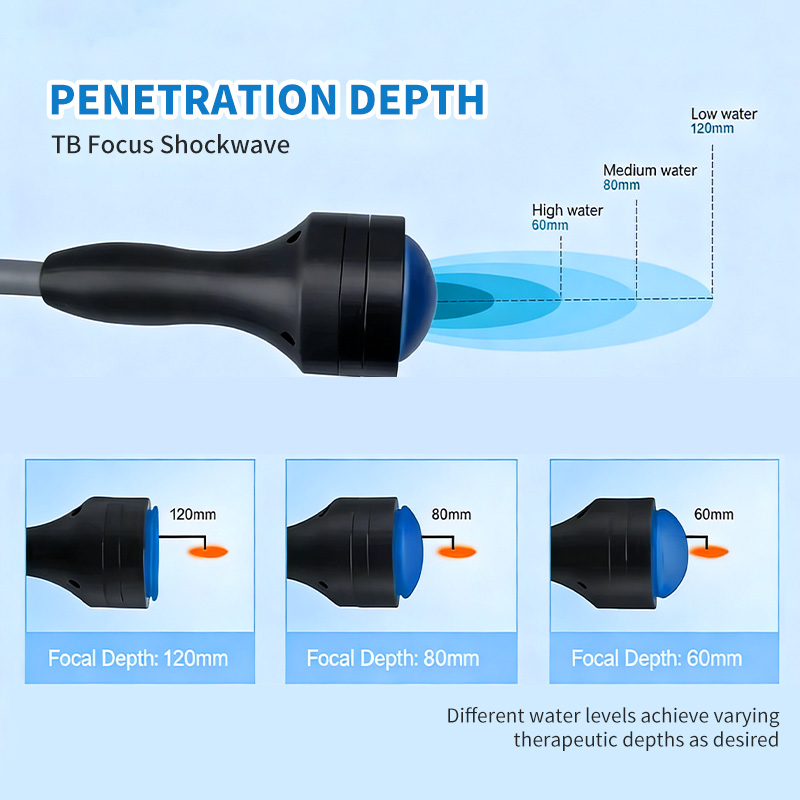
Understanding the fundamental mechanics of ESWT ensures proper clinical application. Radial and focused therapies operate on entirely different physical principles. Radial devices generate dispersive energy. The wave broadens as it enters the skin. It loses intensity rapidly within the first few centimeters. This makes radial therapy ideal for widespread superficial issues. It treats broad areas of myofascial pain effectively. However, it cannot reach deeper anatomical structures.
Focused devices generate converging energy. The acoustic wave narrows to a specific focal point deep within the body. This allows penetration up to 12 centimeters. The energy reaches the cellular level via piezoelectric, electromagnetic, or electrohydraulic generation. It bypasses superficial tissues without causing unnecessary trauma.
Let us examine the mechanical differences closely. Focused shockwave creates powerful cavitation bubbles. These bubbles collapse rapidly, creating mechanical stress. This precise stress triggers complex biochemical cascades. It depletes Substance P, reducing localized pain signals immediately. It also increases Nitric Oxide production significantly. This localized vasodilation enhances blood flow to ischemic tissues. You stimulate natural healing mechanisms exactly where they are needed most.
Application precision separates this modality from other treatments. Practitioners use it for highly specific anatomical targeting. You can treat complex joint spaces accurately. You can target specific tendon insertions safely. The concentrated energy zone avoids damaging surrounding healthy structures. This pinpoint accuracy improves overall clinical outcomes drastically.
Feature | Radial Shockwave Therapy | Focused Shockwave Therapy |
|---|---|---|
Energy Profile | Dispersive (diverging) | Converging (focal point) |
Maximum Depth | Superficial (3-4 cm) | Deep tissue (up to 12 cm) |
Mechanism | Pneumatic/Ballistic impact | Piezoelectric, Electromagnetic, Electrohydraulic |
Best Clinical Use | Widespread myofascial pain, superficial trigger points | Deep joint spaces, specific tendon insertions, bone healing |
Clinical data supports a broad range of applications for this technology. Rigorous studies continue to validate its efficacy. You can address conditions previously considered resistant to standard care. Focused shockwave therapy provides a reliable pathway for tissue restoration.
We see consistent success across several verified indications. Practitioners rely on this modality for stubborn musculoskeletal disorders. Consider these primary conditions supported by extensive clinical research:
Chronic Plantar Fasciitis: Reverses thick, fibrotic tissue changes in the plantar fascia.
Achilles Tendinopathy: Stimulates vascularization in the notoriously poorly perfused Achilles watershed region.
Calcific Tendinitis of the Shoulder: Breaks down pathological calcium deposits mechanically.
Delayed Bone Healing and Non-Unions: Triggers osteoblast activity to bridge stubborn fracture gaps.
The biological benefits translate directly into measurable clinical outcomes. The features of the acoustic wave drive real physiological changes. Pain reduction occurs through the hyperstimulation of nociceptors. The intense energy overloads local nerve endings safely. This provides patients with an immediate analgesic effect. They often leave the clinic feeling noticeable relief.
Tissue regeneration represents the most critical biological benefit. The mechanical force stimulates mesenchymal stem cells. It promotes targeted neoangiogenesis in damaged tissues. New capillary networks form, delivering vital nutrients. Decalcification occurs through precise micro-trauma. The acoustic waves break down hardened pathological calcium deposits effectively. The body then absorbs and clears these fragmented deposits naturally.
Transparency regarding clinical data builds patient trust. You should reference standard expectations based on established clinical studies. Leading institutions publish consistent findings regarding ESWT. You can expect typical success rates between 70% and 80%. These rates apply specifically to resolving chronic tendinopathies. Most protocols require only three to five treatment sessions to achieve these results.
Every medical intervention carries unique advantages and specific limitations. You must weigh these factors objectively before integrating new equipment. Understanding the full scope ensures better patient selection. It also helps manage clinical expectations accurately.
The objective advantages make this therapy highly appealing to modern patients. They actively seek alternatives to traditional surgery. The primary benefits include:
Non-Invasive Nature: Eliminates the risks associated with surgical incisions and anesthesia.
Zero Medication Dependencies: Reduces reliance on opioids and harmful NSAIDs.
Immediate Return to Activity: Patients resume baseline daily activities immediately after treatment.
Short Session Times: Most treatments conclude within 10 to 15 minutes.
However, implementation risks exist. You must prepare your clinic for these realities. True focused generation technology requires significant initial capital expenditure. It represents a major financial commitment for any practice. The learning curve is notably steeper compared to radial devices. The treatment remains highly operator-dependent. Targeting accuracy dictates the overall clinical outcome. Some complex protocols even require ultrasound guidance to ensure precision.
Patient discomfort presents another common challenge during application. The acoustic waves create an intense sensation deep within the tissue. You can manage this discomfort through careful energy titration. Practitioners adjust the output continuously based on patient feedback. The sensation usually subsides the moment the applicator stops pulsing.
Clear contraindications establish safe treatment boundaries. You must screen patients rigorously before application. Never apply the treatment near malignant tumors. Avoid targeting areas directly over the lungs or spinal cord. Exclude patients suffering from severe coagulation disorders. Individuals with active pacemakers should not receive electromagnetic wave therapies. You must also strictly avoid treating patients during pregnancy.
Selecting the right hardware determines your long-term clinical success. You must evaluate any focused shockwave therapy manufacturer carefully. Look beyond the initial marketing materials. Examine the core generator technology. Assess the specific maintenance requirements. Verify the regulatory compliance of each device model.
Assess the differences in generator types carefully. The generation method impacts maintenance frequency and focal zone size. Electrohydraulic systems produce a large focal volume. They utilize a spark gap mechanism inside a water-filled applicator. Electromagnetic systems use a cylindrical coil. They offer consistent energy output and require less frequent maintenance. Piezoelectric systems utilize hundreds of small crystals. They create the sharpest, most precise focal point available.
Chart: Generator Technology Comparison | |||
Generator Type | Generation Mechanism | Focal Zone Characteristics | Maintenance Profile |
|---|---|---|---|
Electrohydraulic | High-voltage spark in water | Large, robust focal volume | Requires regular electrode replacement |
Electromagnetic | Magnetic coil displacing a membrane | Medium focal volume, highly stable | Longer lifespan, moderate maintenance |
Piezoelectric | High-frequency crystal expansion | Extremely precise, pinpoint focal zone | Durable crystals, minimal mechanical wear |
Verify clinical compliance and safety standards rigorously. Demand clear documentation from the vendor. Check for specific FDA clearances for your intended indications. Verify CE marks for European market compliance. Ensure the clinical documentation matches the exact machine model you plan to purchase.
Evaluate scalability and long-term clinical support. A reliable focused shockwave therapy manufacturer provides comprehensive post-sale training. They ensure your staff understands the equipment fully. Check the specific warranty terms carefully. Investigate the availability of replacement parts in your region. Pay special attention to applicator lifespans. Consumable components dictate ongoing operational expenses. Finally, ask about marketing support to help integrate the service into your practice.
Focused shockwave therapy serves as a clinically validated, high-value intervention. It effectively addresses chronic, treatment-resistant musculoskeletal pain. This technology empowers practitioners to heal complex tissue pathologies non-invasively. It bridges the gap between failing conservative care and risky surgical procedures. You can deliver targeted biological repair exactly where patients need it most.
We advise practitioners to weigh their specific patient demographics carefully. High-performance athletes require different recovery timelines compared to general chronic pain patients. Analyze your clinical needs against the initial equipment investment. Proper patient selection ensures optimal clinical results and steady practice growth.
Consider the following next steps to advance your clinical capabilities:
Audit your current patient load to identify chronic cases resistant to conservative care.
Request detailed clinical whitepapers from vetted device manufacturers.
Schedule an in-clinic device demonstration to evaluate targeting precision firsthand.
Review training requirements to ensure your staff can adopt the modality safely.
A: Standard protocols suggest 3 to 5 sessions, spaced 7 to 10 days apart, depending on chronicity and tissue response.
A: Patients may experience mild to moderate discomfort during treatment. Energy levels are adjusted to patient tolerance, and the pain typically dissipates immediately after the session.
A: Some patients report immediate analgesic effects, but true regenerative healing typically peaks 8 to 12 weeks post-treatment.
A: In most regions, ESWT remains an out-of-pocket expense, though it is often HSA/FSA eligible. Clinics should position this clearly as a premium cash-pay service.


